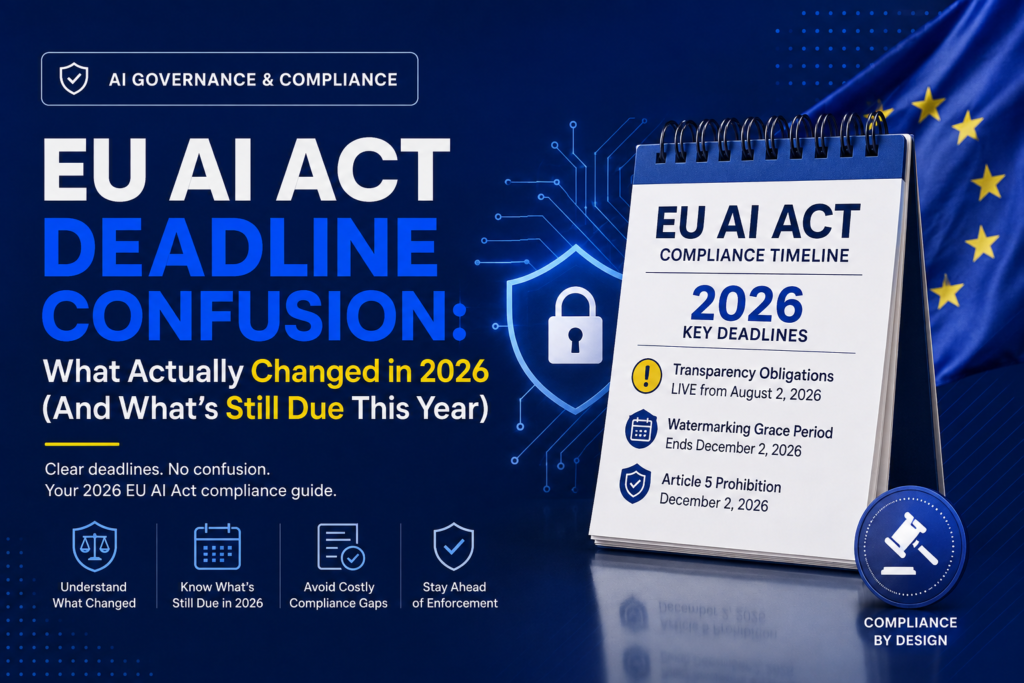
EU AI Act Deadline Confusion: What Actually Changed in 2026 (And What’s Still Due This Year)
Here’s a fun exercise. Ask five compliance leads in your network what the EU AI Act deadline is. I’d bet three of them still say “August 2026.” One will say “it got delayed, we’re fine for now.” And one, the sharpest one in the room, will pause and say “wait, which deadline?”
That pause is the whole story of 2026.
For eighteen months, “August 2, 2026” was gospel. It sat in every compliance calendar, every vendor deck, every LinkedIn carousel about AI governance. Companies built entire roadmaps around it. Legal teams pulled budget forward. Then, on June 29, 2026, the Council of the European Union quietly approved something called the “Digital Omnibus” and the deadline everyone had memorized moved. Not by a few weeks. By sixteen months.
You’d think that would be a relief. In some ways, it is. But here’s the part almost nobody’s writing about clearly: the delay didn’t touch everything. Three separate obligations are still fully live and enforceable before the end of this year, running on a clock that never stopped. And the organizations celebrating the “we got more time” headline are, in some cases, walking straight past deadlines that are still very much real.
Let’s untangle this properly, because half right information here is more dangerous than no information at all.
Navigating the New EU AI Act: A Practical Guide to the Latest Regulatory Changes, Compliance Deadlines, and Business Requirements. Click the link below for the complete guide.
Why the Confusion Even Happened
The EU AI Act was never a single deadline. It was always a staged rollout, ticking through obligations in waves since the Act entered into force in August 2024. The prohibited practices, social scoring, manipulative AI, exploitative targeting, went live back in February 2025 and nobody blinked. The general purpose AI (GPAI) obligations for foundation model providers kicked in six months later, in August 2025. Also quiet.
Then came the big one. August 2, 2026 was supposed to be the moment the Act grew teeth, the date high risk AI systems under Articles 9 through 17, and deployer obligations under Article 26, became binding. This was the deadline that mattered to almost everyone: HR tech, credit scoring, education platforms, law enforcement tools, essential services. If your AI touched people’s lives in a meaningful way, this was your date.
Except the infrastructure the EU needed to actually enforce it, harmonized technical standards, conformity assessment bodies, the EU AI database, wasn’t ready. The European Commission proposed a delay in November 2025. It took until April 2026 for talks to nearly collapse, and until May 7, 2026 for political agreement to land. The Council rubber stamped it in June. And just like that, the deadline everyone had memorized became a different deadline. Two different deadlines, actually.
GCAI’s compliance desk put it plainly: “The Omnibus didn’t cancel the AI Act, it resequenced it. We’re seeing two failure modes right now. Some clients read the headline and stopped preparing entirely. Others ignored the headline and kept panicking about August. Both groups are working off the wrong calendar.”
What Actually Changed vs. What Just Feels Like It Changed
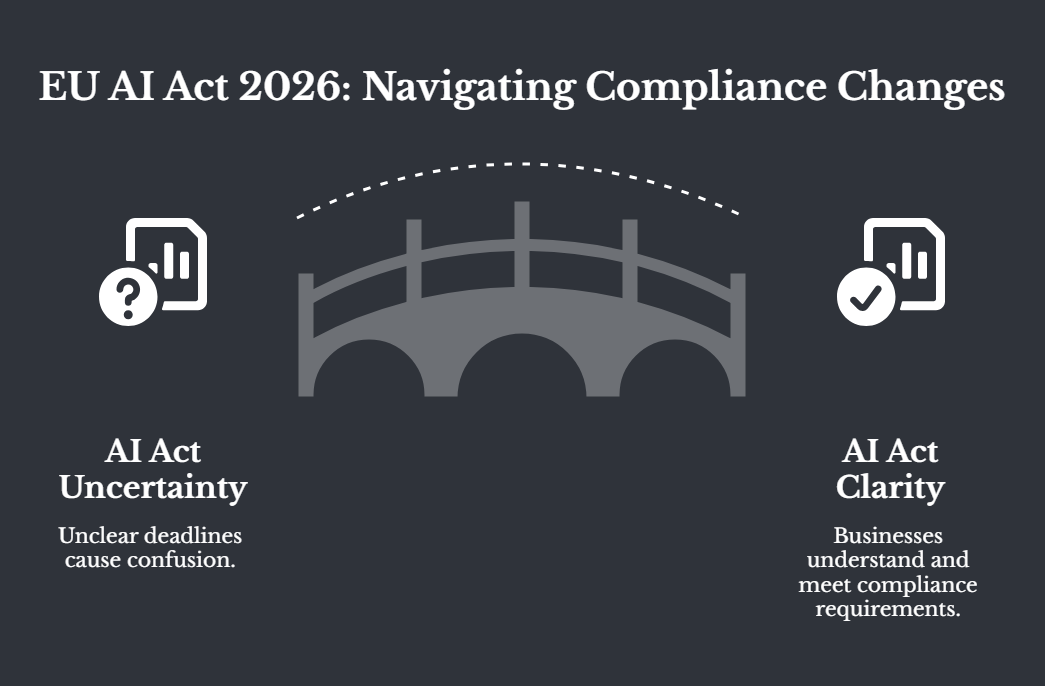
This is the table I wish every news article had led with instead of burying six paragraphs in.
| Obligation | What People Still Believe | What’s Actually True Today |
|---|---|---|
| High risk AI systems (Annex III), new or substantially modified | Due August 2, 2026 | Pushed to December 2, 2027 |
| High risk AI embedded in regulated products (medical devices, toys, lifts, industrial machinery) | Due August 2, 2026 | Pushed to August 2, 2028 |
| Transparency obligations (Article 50), AI interaction disclosure, content labeling | Assumed swept up in the delay | Untouched. Live since August 2, 2026. |
| Watermarking AI generated content on systems deployed before Aug 2026 | Assumed delayed with everything else | Short grace period, expires December 2, 2026 |
| New prohibition on AI generated nonconsensual intimate imagery | Assumed tied to high risk delay | Independent deadline: December 2, 2026, applies no matter your risk classification |
| Prohibited practices (social scoring, manipulative AI) | Already banned | Confirmed, unaffected, in force since Feb 2025 |
| GPAI provider obligations | Already active | Confirmed, unaffected, in force since Aug 2025 |
Notice the pattern. The delay is real, but it’s surgical. It hit exactly two categories, Annex III and Annex I high risk systems, and left everything else exactly where it was. If your compliance calendar got a blanket update that said “AI Act: pushed to 2027,” someone updated it wrong.
The Two Tier Delay, Properly Explained
There isn’t one new deadline. There are two, and they cover different things.
Tier one covers new or substantially modified high risk systems under Annex III, think employment decisions, credit scoring, law enforcement tools, education access, migration processing, essential services. These now have until December 2, 2027. A sixteen month reprieve.
Tier two covers AI that’s a product or safety component of something already regulated under EU product safety law, medical devices, toys, elevators, radios, that whole world. These get August 2, 2028, a twelve month extension. There’s a quieter change buried in here too: the definition of “safety component” got narrowed. If your embedded AI just assists a user or optimizes performance without creating a genuine health or safety risk, it may no longer trigger high risk obligations at all. That’s worth rechecking your inventory over, not just filing away.
According to GCAI’s compliance desk: “That narrowed safety component definition is the real story hiding under the bigger headline. A lot of embedded AI companies assumed was automatically high risk might not be anymore. That’s a reason to go back and rescope your inventory, not a reason to stop looking at it altogether.”
The Part Everyone’s Skipping: What’s Still Due This Year
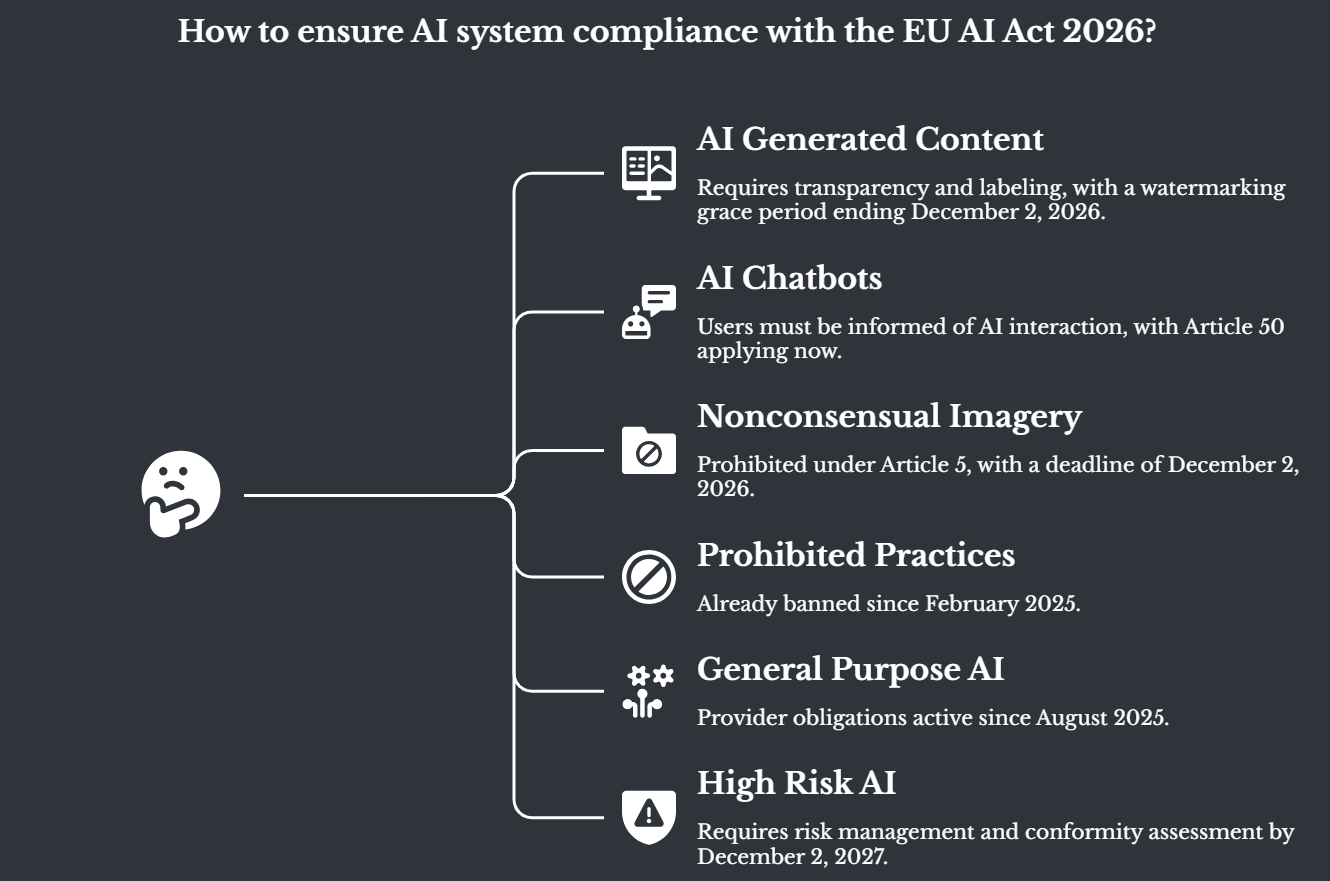
Here’s where I want you to slow down, because this is where the actual risk sits right now, not in 2027, but in the next few months.
I built this out as a decision tree because “am I affected” isn’t a yes or no question anymore. It depends entirely on what your system does.
Does your AI system generate content, or interact directly with a human user?
│
├── Does it generate or manipulate image, audio, video, or text that could
│   pass as authentic human made content (deepfakes, synthetic media, AI copy)?
│   │
│   ├── YES → Article 50 transparency obligations apply RIGHT NOW (since Aug 2, 2026)
│   │         │
│   │         └── Was this system already deployed BEFORE August 2, 2026?
│   │                   ├── YES → You have a watermarking grace period, but it
│   │                   │         closes December 2, 2026. Not far off.
│   │                   └── NO (deployed after) → Watermarking is due immediately,
│   │                             no grace period applies.
│   │
│   └── NO, but it does interact with people directly (chatbot, virtual
│       assistant, AI customer service)?
│             └── YES → You must disclose the user is talking to AI, due NOW.
│
├── Could the system generate or facilitate nonconsensual intimate imagery,
│   including as a "reasonably foreseeable and reproducible outcome" of
│   normal operation?
│         └── YES → New Article 5 prohibition applies from Dec 2, 2026,
│                   REGARDLESS of your high risk status. This one doesn't care
│                   whether you got the delay or not.
│
├── Does it fall under the original prohibited practices, social scoring,
│   manipulative or exploitative AI, unlawful biometric categorization?
│         └── YES → Already banned since February 2025. No change.
│
├── Is it a general purpose AI model, a foundation model offered as a base
│   for downstream use?
│         └── YES → Provider obligations active since August 2025. No change.
│
└── Is it high risk under Annex III, new or substantially modified,
    touching employment, credit, education, law enforcement, essential
    services, migration?
              └── YES → You now have until December 2027. But the substance,
                        risk management, technical documentation, conformity
                        assessment, hasn't gotten lighter. Just later.
Three things fall out of that tree that deserve their own explanation, because they’re the ones quietly slipping past people.
Article 50 transparency is not a 2027 problem. It’s already here. If you’re running any kind of AI chatbot, virtual assistant, or customer facing AI tool, you’re required to disclose that to the user, as of August 2, 2026. This obligation never moved. It was never part of the delay conversation. And it’s exactly the kind of requirement that’s easy to overlook when everyone’s talking about “the big high risk deadline” instead.
The watermarking window is closing fast. If you deployed AI generated content before August 2, 2026, you got a short reprieve, originally proposed at six months, trimmed down to four. That window shuts on December 2, 2026. If you haven’t started building watermarking or labeling into your content pipeline, that’s not a lot of runway.
The Article 5 imagery prohibition doesn’t care about your risk tier. This is new, it’s specific, and it was written broadly enough to catch content that’s a “reasonably foreseeable and reproducible outcome” of how a system normally operates, not just intentional misuse. December 2, 2026 is the date, and it applies whether or not your system is classified as high risk at all.
The Full Calendar, Cleaned Up
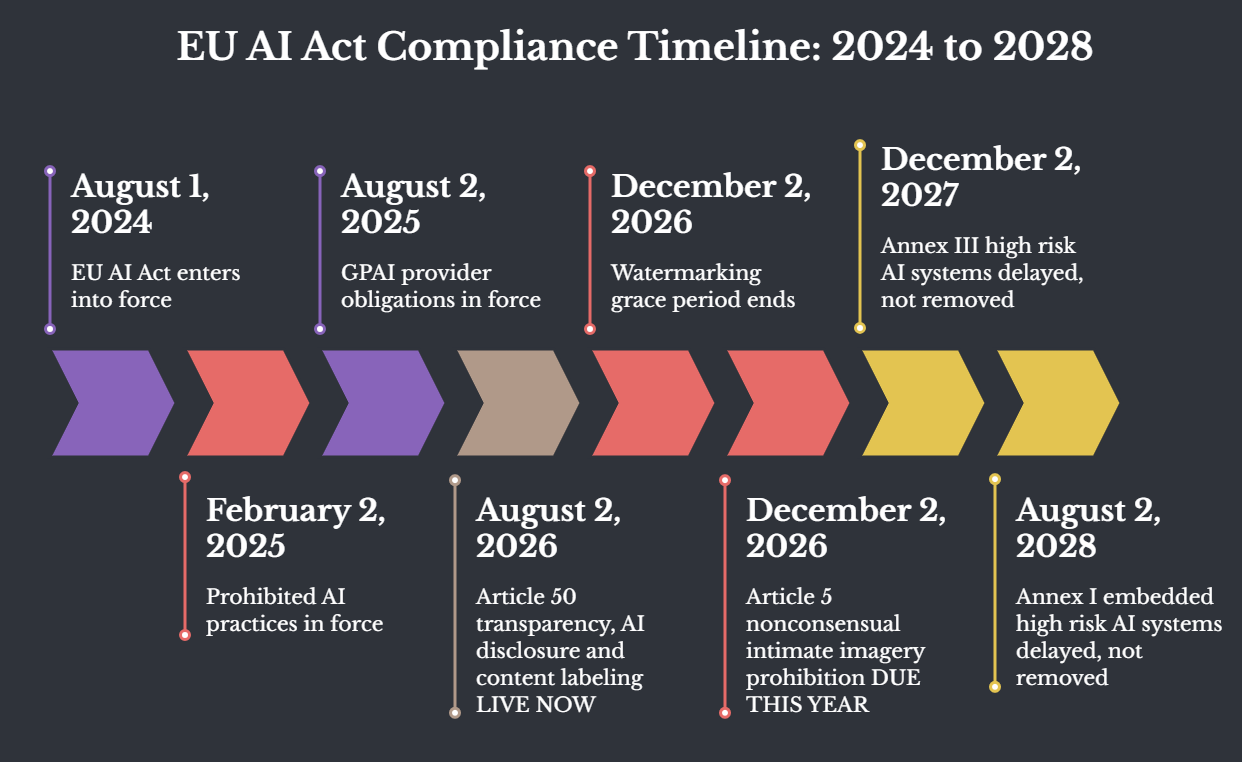
Print this. Pin it somewhere your legal and product teams both see it.
| Date | Obligation | Status |
|---|---|---|
| Aug 1, 2024 | Act enters into force, all compliance clocks start | Passed |
| Feb 2, 2025 | Prohibited AI practices banned | In force |
| Aug 2, 2025 | GPAI model provider obligations active | In force |
| Aug 2, 2026 | Article 50 transparency, AI disclosure, content labeling | Live now |
| Dec 2, 2026 | Watermarking grace period ends | Due this year |
| Dec 2, 2026 | Article 5, nonconsensual intimate imagery prohibition | Due this year |
| Dec 2, 2027 | High risk AI, Annex III (new/modified) | Delayed, not removed |
| Aug 2, 2028 | High risk AI, Annex I embedded products | Delayed, not removed |
The Fines Didn’t Move, Only the Dates Did
It’s worth being blunt about this part, because the Omnibus conversation has made people soft on urgency. The penalty structure is exactly as harsh as it was before the delay.
| Violation Type | Maximum Penalty |
|---|---|
| Prohibited AI practices | Up to €35 million or 7% of global turnover |
| High risk system non compliance | Up to €15 million or 3% of global turnover |
| Misleading regulators | Up to €7.5 million or 1% of global turnover |
| SMEs and startups | Proportionate, capped lower |
And the Act still reaches beyond EU borders. It applies to any provider placing an AI system on the EU market or serving EU users, regardless of where the company is headquartered. For an Indian SaaS company with European customers, or a US firm processing EU user data through an AI feature, “we’re not based there” has never been a valid exemption.
A Word on Employment AI, Because It’s a Trap
If you’re running AI in recruitment, performance review, task allocation, worker monitoring, or promotion and termination decisions, you’re squarely inside Annex III territory, which means you now have until December 2027. Good news, on paper.
But here’s the trap: if that same recruitment AI also talks to candidates, screens them through a chatbot, say, you’ve got an Article 50 disclosure obligation sitting on top of it that’s already live today. The high risk classification and the transparency obligation are two separate tracks. Getting the extension on one doesn’t get you the extension on the other.
“We’re telling clients not to treat 2027 as ‘later,'” says GCAI’s compliance desk. “Eighteen months disappears fast once you’re actually building a risk management system and technical documentation from zero. The regulators have been clear this reflects a standards readiness gap on their end, not a softening of what’s expected from you. Companies that keep building through this window are the ones who’ll actually be ready when enforcement lands.”
The Misconceptions I’m Hearing on Every Call Right Now
| What People Are Saying | What’s Actually True |
|---|---|
| “It got delayed, so nothing’s due this year” | Article 50 is live now; watermarking and Article 5 are due December 2026 |
| “The delay covers all AI systems” | It’s specific to Annex III and Annex I high risk systems only |
| “This is final, no more surprises” | The Omnibus is adopted, but the standards infrastructure behind it is still being built, expect more movement |
| “We’re not in the EU, so this doesn’t touch us” | Extraterritorial reach applies to anyone serving EU users or placing systems on the EU market |
| “We’re not high risk, so we’re exempt” | Article 5 and Article 50 apply independent of high risk classification |
How GCAI Helps
This is exactly the kind of moment certification bodies exist for, not to sell you software, but to tell you plainly what’s real and what isn’t.
GCAI starts with a deadline accurate gap assessment. Not a generic AI Act checklist, but a mapping of your specific system inventory against the actual current timeline, separating what’s genuinely due now (Article 50, watermarking, Article 5) from what has real runway (Annex III, Annex I). Most of the budget conversations happening right now are about redirecting spend toward the deadlines that never moved, instead of the one everyone’s been staring at.
GCAI prioritizes transparency and labeling readiness, the obligation the market is currently ignoring because it’s not the headline. Article 50 disclosure and content labeling controls are the pieces most likely to see early enforcement activity, precisely because that’s the one deadline that stayed put.
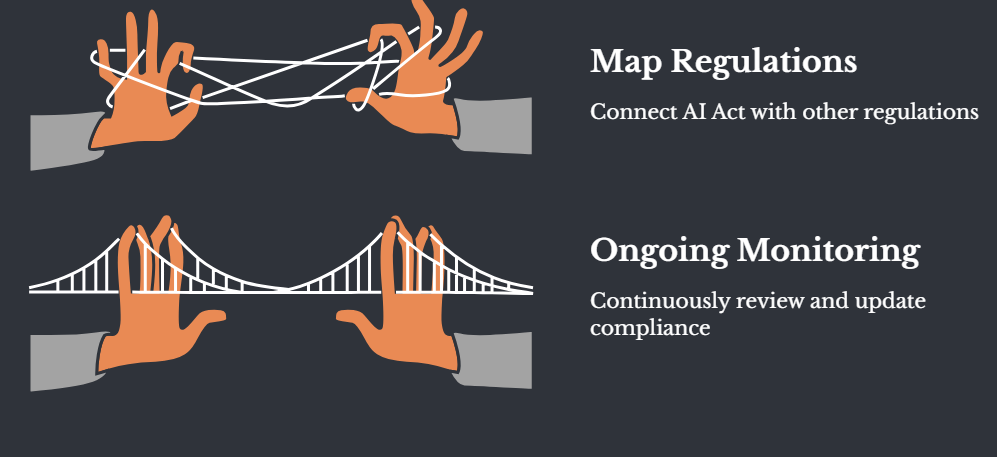
GCAI builds this to connect, not to duplicate. Almost none of GCAI’s clients are dealing with the EU AI Act in isolation. It’s sitting alongside DPDP obligations, DORA for financial services, GDPR, and privacy frameworks like ISO 27701. GCAI structures AI governance work so it feeds into those adjacent certifications instead of creating four separate binders that never talk to each other.
“Nobody wants four different compliance projects running in parallel for GDPR, DPDP, DORA, and the AI Act,” says GCAI’s compliance desk. “We build one governance structure and map it against all four. That’s the only version of this that stays manageable past 2026.”
What to Actually Do Before December 31, 2026
Skip the panic. Work the list.
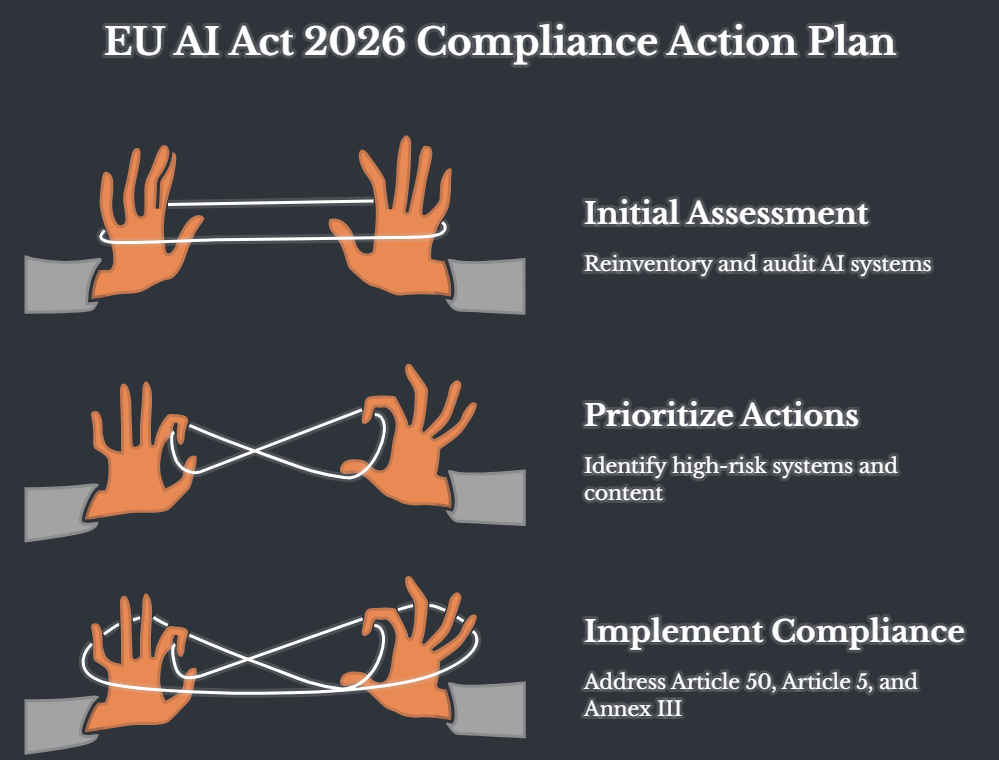
- Re-inventory every AI system you run and classify it correctly under the post Omnibus definitions, prohibited, GPAI, high risk Annex III/I, or transparency only.
- Audit every user facing AI touchpoint for Article 50 compliance. This is enforceable today, not in 2027.
- Find every piece of AI generated content deployed before August 2, 2026 and get watermarking sorted before the December 2 grace period ends.
- Check your exposure under Article 5, regardless of high risk status, this one ignores classification entirely.
- Don’t quietly deprioritize Annex III prep just because you have until 2027. Use the extra time to build something defensible, not to shelve it.
- Rerun your “safety component” classifications under the narrowed definition, some of what you assumed was high risk may not be anymore.
- Map this against DPDP, DORA, and GDPR if you’re operating across jurisdictions, so you’re not solving the same problem four separate times.
The EU AI Act didn’t get simpler this year. It got more confusing, and that confusion is now the actual compliance risk, more so than the regulation itself. “Deadline delayed” is true. It’s just not the whole sentence.
Three obligations are still fully live before the year is out. The substance behind the high risk requirements hasn’t softened, only the calendar has moved. And the companies that come out ahead when enforcement actually starts in December 2027 won’t be the ones who breathed a sigh of relief in June, they’ll be the ones who kept building anyway.