- ISO 27001
- Information Security standard
ISO 27001 Certification for a More Secure and Trusted Business
- Structured guidance
- Independent audits
- Clear coordination
- ISO 27001
- Information Security standard
ISO 27001 Certification for a More Secure and Trusted Business
- Structured guidance
- Independent audits
- Clear coordination

ISO/IEC 27001:2022
The standard for information security
93
Reference controls
4
Connected control themes
3 years
Certification cycle
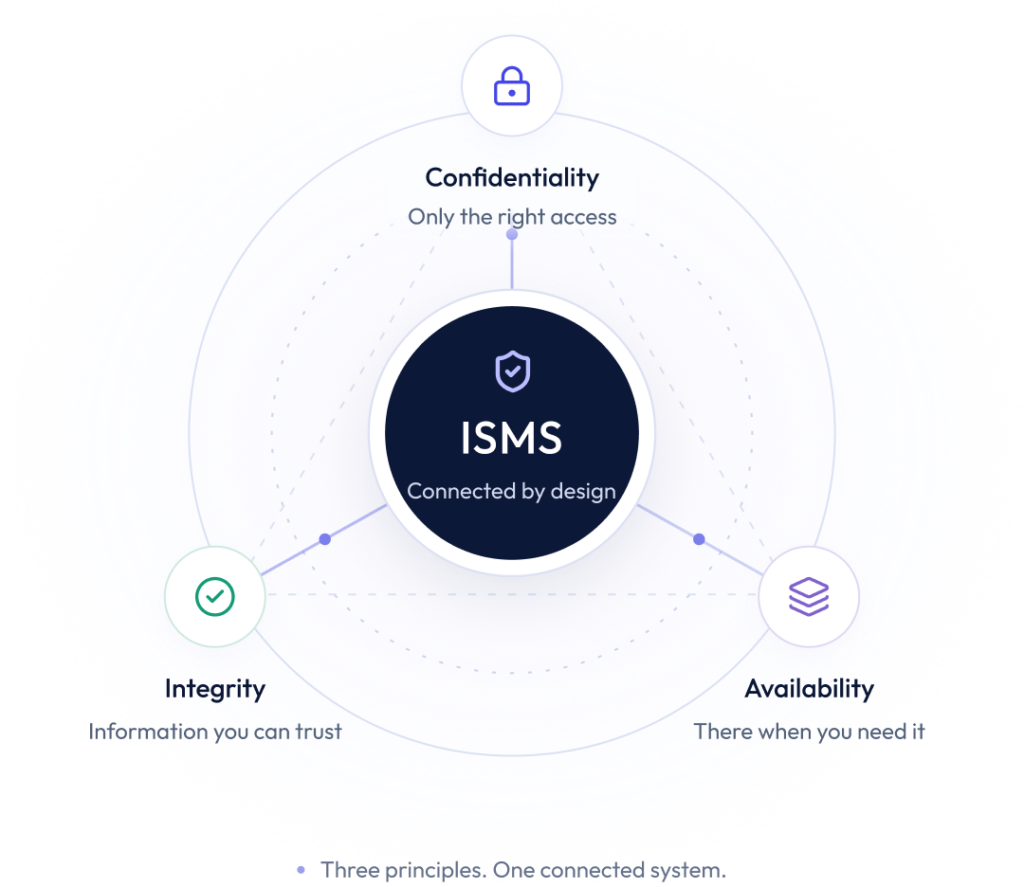
One connected system. Stronger security culture.
- Policies
- Processes
- Controls
- Risk assessment
- Continual improvement
Build customer confidence
Show customers and partners that information security is managed systematically and verified by an independent audit.
Keep risk in focus
Identify, assess, and treat information security risks on an ongoing basis so decisions stay grounded in what matters most.
Improve with purpose
Use monitoring, internal audits, and management review to keep the ISMS effective as your organization and its threats evolve.
A complete view of your information security.
93
Reference controls
One framework.

- One framework · Annex A · ISO/IEC 27001:2022
- Proportional view of 93 reference controls across four themes
Annex A · 5
37 of 93
Organizational controls
Policies, roles, supplier relationships, and the governance that directs how information security is managed.
Annex A · 6
8 of 93
People controls
Screening, awareness, responsibilities, and working practices for the people who handle information.
Annex A · 7
14 of 93
Physical controls
Secure areas, equipment, and the protection of physical assets from unauthorized access and environmental threats.
Annex A · 8
34 of 93
Technological controls
Access control, cryptography, logging, secure development, and the technical safeguards across your systems.
Audit focus
Organizational controls 37 reference controls
Evidence may include
Security policies, assigned responsibilities, supplier oversight, incident records and information handling processes.
Control selection is risk based
The Statement of Applicability records necessary controls and the justification for inclusion or exclusion.
The management system
Requirements in Clauses 4–10
4
Context
5
Leadership
6
Planning
7
Support
8
Operation
9
Performance
10
Improvement
- Clauses 4–10
- Context to continual improvement — the auditable backbone of your ISMS.
A clear route from application to certification.
01
Scope & planning
Understand the organization's scope, requirements and readiness.
02
Stage 1 audit
Review documentation, scope and readiness for the next audit stage.
03
Stage 2 audit
Evaluate implementation and the effectiveness of the management system.
04
Findings & closure
Review findings and address identified nonconformities.
05
Decision & certificate
Complete the certification decision process and issue the certificate when requirements are met.
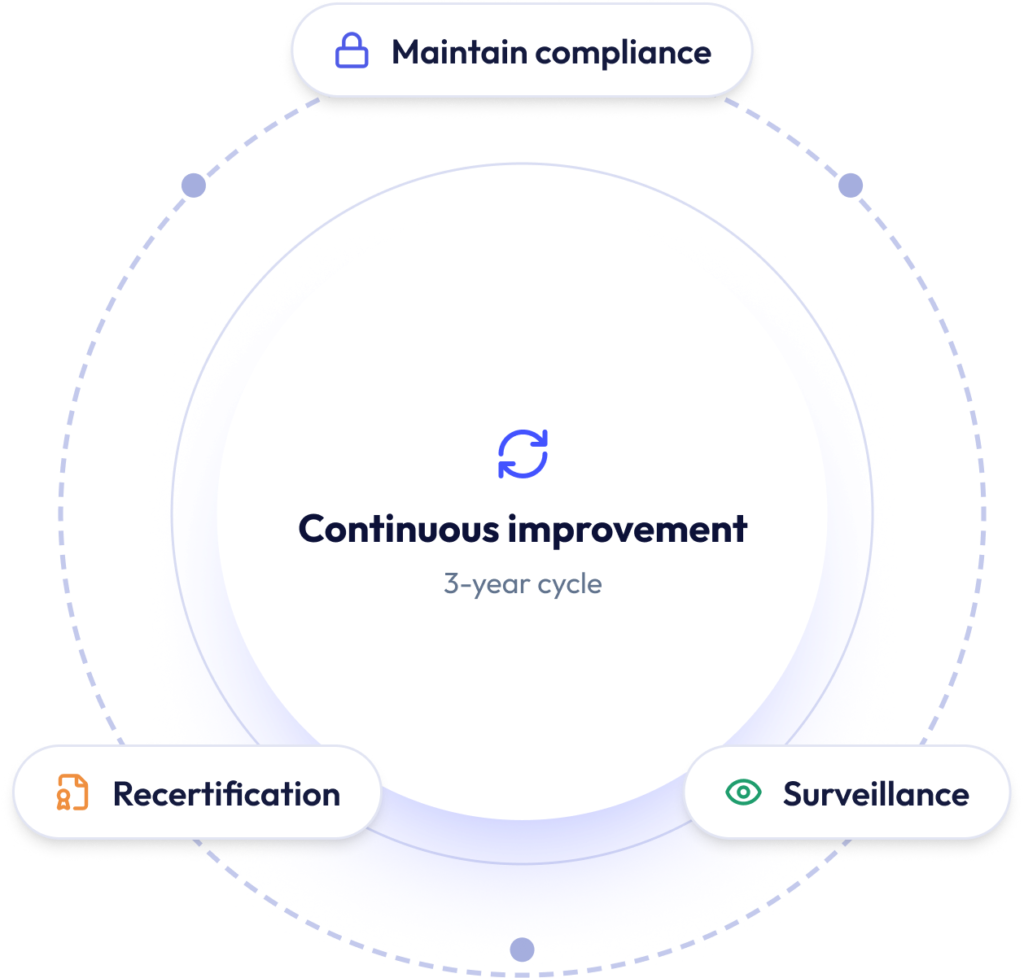
Certification is the beginning. Keep building on it.
Prepare your organization and work through each audit stage with structured guidance and transparent communication.
First surveillance
From the initial certification decision.
Second surveillance
Review ongoing conformity and changes.
Recertification
Complete reassessment before certificate expiry.
Expertise you can see. Assurance you can verify.

Accredited competence
Expertise and certification processes supported by appropriate competence.
Evidence that matters
A structured approach to evidence and audit requirements.
Clear coordination
A transparent and organized certification process.
Impartial decisions
Certification decisions based on objective evidence and independent review.
Independent review at every decision. Objectivity is built into how we audit, evaluate and certify.
Clarity before you commit.
What is ISO/IEC 27001 certification?
How long should the SOC 2 Type II observation period be?
Do we need to include all five Trust Services Criteria?
How often should SOC 2 be renewed?
How long does a SOC 2 audit take?
Ready to turn security into confidence?