
- ISO 42001
- Responsible AI | Trusted Innovation
ISO 42001 Certification for Responsible AI Excellence.
- Responsible AI
- Independent Audits
- Clear Certification
- ISO 42001
- Responsible AI | Trusted Innovation
ISO 42001 Certification for Responsible AI Excellence.
- Responsible AI
- Independent Audits
- Clear Certification

A clear structure. For responsible AI.
38
Annex A reference controls
09
AI control areas
02
Certification audit stages
Governance in continuous motion.
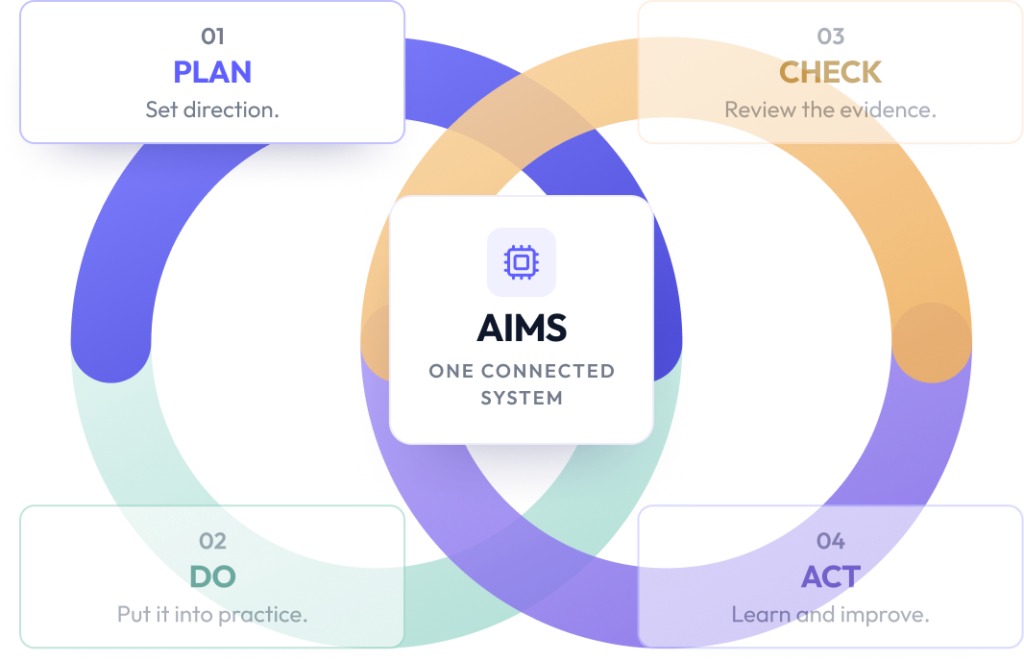
Plan
Do
Check & Act
The controls behind responsible AI.
38
Reference controls
09
control areas.
A.2 to A.10
- Nine areas. One connected system.
A.2 · 03 Controls
AI policies
Direction and rules for responsible AI.
A.3 · 02 Controls
Roles & Responsibilities
Clear ownership across the organization.
A.4 · 05 Controls
AI resources
People, tools and information the AIMS needs.
A.5 · 04 Controls
AI impacts
Assess impacts on individuals and society.
A.6 · 09 Controls
AI lifecycle
Controls across design, development and use.
A.7 · 05 Controls
Data governance
Quality, provenance and appropriate use of data.
A.8 · 04 Controls
Stakeholder information
Transparent, appropriate communication.
A.9 · 03 Controls
Responsible use
Expectations for people working with AI.
A.10 · 03 Controls
Third-party relationships
Due diligence across the AI supply chain.
- Applicability is risk based. The Statement of Applicability records necessary controls and the justification for exclusions.
From your AI landscape to independent assurance.
01
Scope & Planning
Define the AIMS scope and plan the assessment.
02
Stage 1 Audit
Review documented information and readiness.
03
Stage 2 Audit
Assess the management system in practice.
04
Findings & Closure
Address findings and review evidence of action.
05
Decision & Certificate
An independent decision follows the audit review.
Keep your AI governance moving forward.
01
First surveillance
Review the AIMS following the initial certification decision.
02
Continued surveillance
Continue monitoring the management system and its ongoing effectiveness.
03
Recertification
Reassess the AIMS as part of the continuing certification process.
AI moves fast. Assurance needs judgment.
AI Risk Assessment
A structured look at AI-related risks and their context.
Independent Decisions
Impartial review supports the certification decision.
02
Clear Coordination
Understand the process, next steps, and what to prepare.
Evidence That Matters
Focus on objective information relevant to your AIMS.
Clarity before you commit.
What is ISO/IEC 27001 certification?
How long should the SOC 2 Type II observation period be?
Do we need to include all five Trust Services Criteria?
How often should SOC 2 be renewed?
How long does a SOC 2 audit take?
Start with AI landscape
Share your AI landscape and certification goals. We'll outline the scope, programme and next steps.
Purpose & role
Develop, provide or use AI.
Systems & use cases
What you want in scope.
Team & locations
The footprint of your AIMS.
Make responsible AI part of how you do business.